

Winter Tires: Why They Matter and When to Switch
If you've ever driven through a Chicago winter, you know how quickly road conditions can turn dangerous. Black ice, packed snow, and freezing slush are no match for standard all-season tires — but winter tires are engineered specifically for these conditions. Whether you're a longtime Midwest driver or new to cold-weather driving, understanding winter tires could save your life this season.
Here's everything you need to know — what winter tires are, why they work, when to switch, and how to make the most of them.
Step 1: Understand What Makes Winter Tires Different
Winter tires aren't just all-season tires with a different name. They're engineered from the ground up for cold-weather performance. The biggest difference is the rubber compound. All-season and summer tires use rubber that hardens when temperatures drop below 45°F — and hard rubber means less grip. Winter tires use a softer, more flexible compound that stays pliable in freezing temperatures, maintaining contact with the road surface even on ice.
Beyond the rubber, winter tires have a dramatically different tread pattern. You'll notice deeper grooves, more aggressive siping (the tiny slits cut into the tread blocks), and wider channels designed to evacuate snow and slush quickly. This gives the tire something to bite into rather than floating on top of packed snow.
The result is significantly shorter stopping distances, better cornering stability, and more responsive steering in cold and wintry conditions — all things that can make the difference in an emergency.
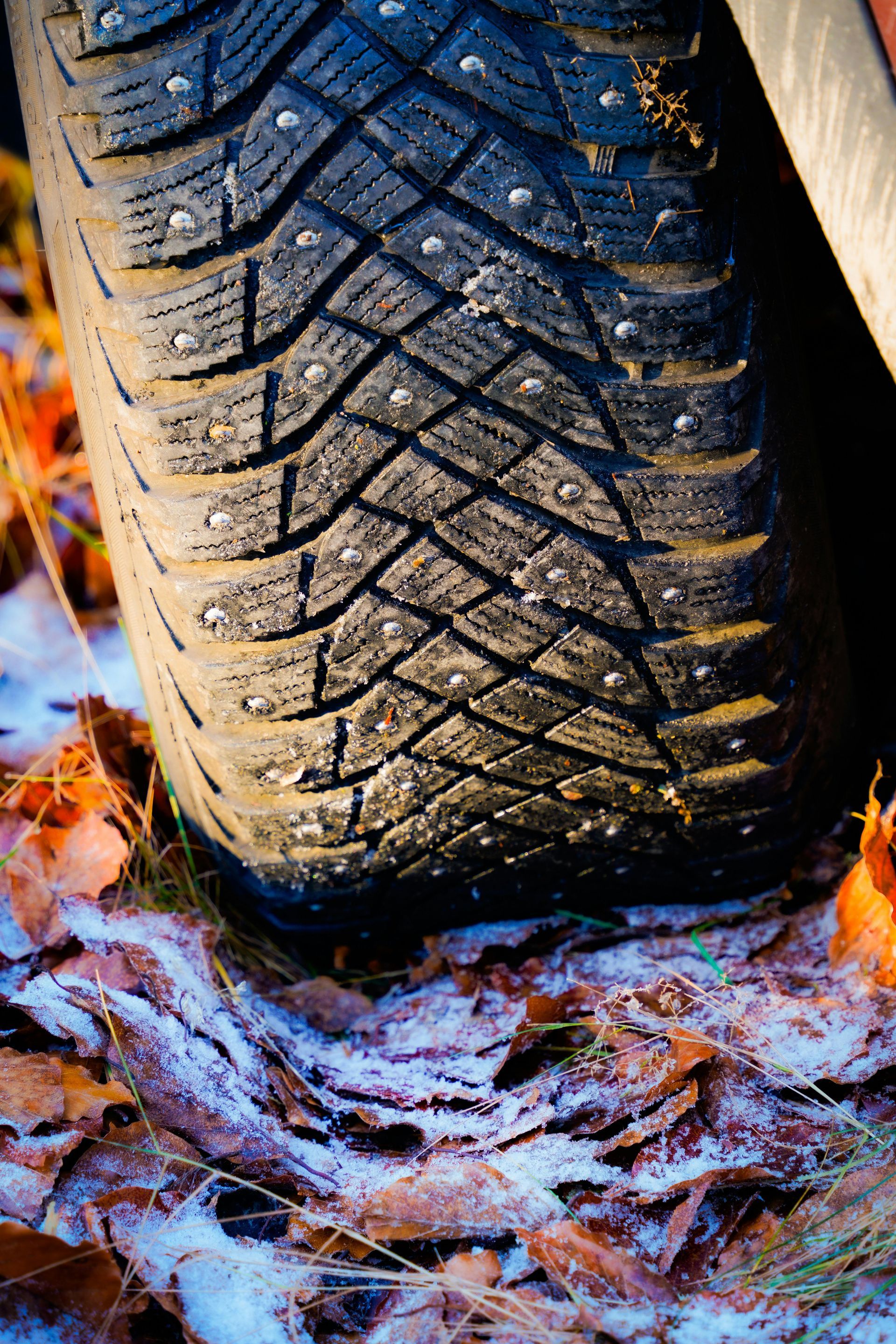
Step 2: Know When to Make the Switch
The general rule of thumb: switch to winter tires when temperatures consistently drop below 45°F. You don't need to wait for snow on the ground — in fact, you should switch before the first snowfall, not after. Once winter conditions arrive, tire shops get backed up quickly and you may be waiting days for an appointment.
In the Chicago area, that window is typically mid-October through mid-November. Don't wait until December. And in the spring, switch back to your all-season or summer tires once temps are consistently above 45°F — leaving winter tires on through spring and summer wears them down faster and reduces their effectiveness next season.
A good memory trick: swap when you change your clocks. Fall back, put winters on. Spring forward, take them off.
Step 3: Put Winter Tires on All Four Wheels
This is one of the most common mistakes drivers make: putting winter tires only on the drive wheels. Front-wheel drive? They put winters on the front. Rear-wheel drive? They put them on the back. This is dangerous.
If only two wheels have winter tires, you create a handling imbalance. The wheels with winter tires will grip significantly better than the ones without — and your car will not respond predictably when braking or cornering. You could spin out even at low speeds.
Always install winter tires on all four corners. It's the only way to get the full safety benefit and maintain balanced, predictable handling throughout the vehicle.
Step 4: Consider a Dedicated Winter Wheel Set
If you're serious about winter driving — and if you live in the Midwest, you should be — consider purchasing a second set of wheels to mount your winter tires on. This typically means a set of steel wheels or lower-cost alloys sized for your vehicle.
Having a dedicated winter wheel-tire set makes the seasonal swap much faster and cheaper. Instead of paying for a dismount and remount every season, your shop just swaps the whole wheel assembly. Over two or three seasons, a dedicated set pays for itself. It also protects your nicer summer wheels from salt, potholes, and the general abuse of winter roads.

Step 5: Check Tire Pressure Regularly
Cold weather causes tire pressure to drop — roughly 1 PSI for every 10°F decrease in temperature. A tire that was properly inflated in October may be underinflated by 5–7 PSI by January. Underinflated tires handle poorly, wear unevenly, and reduce fuel efficiency.
Get in the habit of checking tire pressure once a month during winter, and always check it when there's a significant temperature swing. Use a quality gauge and check when the tires are cold (before driving more than a mile). Your vehicle's recommended tire pressure is listed on the sticker inside the driver's door jamb — not on the tire sidewall, which shows the maximum pressure.
Step 6: Don't Forget About Tread Depth
Even the best winter tire loses its effectiveness as the tread wears down. Winter tires should be replaced when tread depth reaches 4/32" — that's deeper than the standard 2/32" replacement threshold for summer tires. The deeper siping and channels that make winter tires effective only work when there's enough tread depth to function.
An easy check: place a quarter upside down in the tread groove. If you can see the top of Washington's head, you're at about 4/32" — time to replace. Many shops will check this for free during a seasonal swap.
Final Thought: Winter Tires Are an Investment in Safety
Winter tires are one of the highest-value safety investments you can make as a driver in the Chicago area. The cost of a quality set — especially when spread across several seasons — is a fraction of what a single accident or tow can cost, let alone injuries or vehicle damage.
If you have questions about winter tire options for your specific vehicle, or need help scheduling your seasonal swap, contact us. We're happy to help you find the right setup and keep you safe all winter long.